Showing posts with label Twelve Days of Christmas. Show all posts

Fifth Day of Christmas: 20 GO-OLD RINGS!

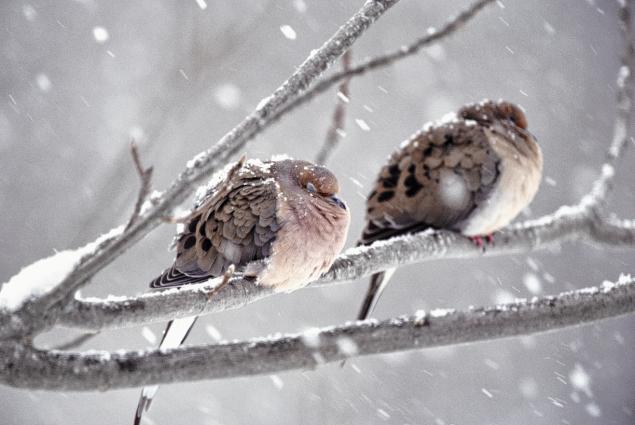
The Hobbit, An Unexpected Journey
One Ring inscription.svg

"Three Rings for the Elven-kings under the sky, 
Seven for the Dwarf-lords in their halls of stone, 
Nine for Mortal Men doomed to die, 
One for the Dark Lord on his dark throne 
In the Land of Mordor where the Shadows lie. 
One Ring to rule them all, One Ring to find them, 
One Ring to bring them all and in the darkness bind them 
In the Land of Mordor where the Shadows lie."
-J.R.R. Tolkien's epigraph, The Lord of The Rings

...And a Partridge in a Pear Tree.
Love this pocket edition, with illustrations by Tolkien

"Official Movie Guide" by Brian Sibley (review here)

FOUR MIXED UP CALLING BIRDS

Have you ever wondered what those "Four Calling Birds" are all about? (Explanation to follow...)  


Are these calling birds?

Definitely not these guys...


Hmmm. [source]

My favorite:
source: Anne Geddes
There's a reason the stanza about "calling birds" doesn't make much sense: the original line in the song The 12 Days of Christmas names four "colly birds", an alternate word for the Common Blackbird. The Blackbird is a common backyard bird in Europe and has a melodious song. It also lives in Asia, North Africa and it has been introduced to Australia and New Zealand. [source: Birdorable.com]

In England a coal mine is called a colliery and colly or collie is a derivation of this and means black like coal. 

For a long time in England, blackbirds have been referred to as both blackbirds (as in the nursery rhyme Sing a Song of Sixpence) and colly birds as in The Twelve Days of Christmas.

As to why the person in the song would give his true love a gift of blackbirds, the answer is that this would have been another gift of food. Blackbirds were plentiful and were a common food. [source: Hubpages.com]


Mystery solved.  

Third Day - 3 French Hens and 3 French Books

Noel comes from the French phrase "les bonnes nouvelles", 
translated "Good News", and refers to the Gospel.
On the Third Day of Christmas, my True Love Gave to Me
    Three French Hens...

My daughter and her husband lived in France for nine months, and they brought home the gastronomy of that culture to share with us.  Highlighting our Christmas dinner this year was a capon - which admittedly is not a hen, but a rooster - quite delectably roasted by my son-in-law...
accompanied by brussels sprouts, tartiflette (french scalloped potatoes with Camembert and bacon), and good old American "stuffing".

Our table, ready for Christmas Dinner

After-Christmas-dinner-silver-and-crystal-washed-and-dried by my husband!

Three French Books:
1. BABAR AND FATHER CHRISTMAS (BABAR ET LE PÈRE NOËL) by Jean de Brunhoff. King Babar's children in Celesteville hear of the wonderful Father Christmas who brings toys to all the children in Man Country on Christmas Eve. The children write a letter to Father Christmas in the hopes of inviting him to Celesteville but when their letter goes astray, King Babar goes into Man Country to search for him personally...


2. ADELE & SIMON by Barbara McClintock. Adele cautions her brother not to lose anything on their way home from school...well, you can guess what happens! Gorgeous illustrations of neighborhoods and landmarks bring to life a simple story, set in early 20th century Paris. Not to be missed! (Note: with careful searching each of Simon's lost items can be found!)

3. MIRETTE ON THE HIGH WIRE by Emily Arnold McCully. Mirette was always fascinated by the strange and interesting people who stayed in her mother's boarding house. But no one excited her as much as Bellini, who walks the clothesline with the grace and ease of a bird. Mirette on the High Wire is a great book to explore fear and bravery. First, the definition of bravery is presented in different ways throughout the book. Mirette and Bellini perform dangerous and potentially scary acts by walking the high wire. Mirette has no fear of the wire, and Bellini does, even though he has done it many times. So, this questions whether bravery is the absence of fear or the over-coming of fear. (1993 Caldecott Medal Winner)

Second Day of Christmas...the Feast of Stephen

On the second day of Christmas, my true love gave to me
    Two Turtle Doves...

JOSEPH DEVENNEY/GETTY IMAGES

This is an amazing pop-up book by Robert Sabuda

The feastday of Saint Stephen - the first Christian martyr - is commemorated on December 27 in the Eastern Orthodox Church.  (His day is celebrated on December 26 in the West.)  You might enjoy the books below from my past posts and Good King Wenceslas and Stephen's Feast:


click here for my post about Good King Wenceslas
click here for post about "Stephen's Feast"
and this book by Pauline Baynes

On the First Day of Christmas, I Started Baking!

Elsa Beskow

Somehow as the years go by, the days leading up to Christmas seem to get busier and busier (or maybe I'm just getting older and slower?)  At any rate, this year I determined to save my baking and gift-giving for friends and neighbors until after the 25th - in order to spread the cheer over the Twelve Days of Christmas and lessen my stress.


Inspired by the book Celebrating the Twelve Days of Christmas, from December 26th to January 6th, I'll be reflecting on the 12 days leading up to Epiphany in my posts. (The book is available HERE.)

Along with craft ideas and Orthodox devotional material for the festal days, this wonderful new book by AmandaEve Wigglesworth offers a Christian perspective on the popular "Twelve Days of Christmas" song - to remind ourselves of the gifts God gives to us.
Carsten/Three Lions/Getty Images
On the first day of Christmas, my true love gave to me
    A Partridge In A Pear Tree...


Loren Long
Jan Brett

[Tomorrow, December 27, St. Stephen's Day is celebrated in the Eastern Orthodox Church, and I'll be highlighting some good picture books.  In the West, the saint is celebrated today.  Click HERE for my past posts about Good King Wenceslas and the Feast of Stephen.]

ONE MORE GIFT...for the 12th Day of Christmas

January 6th is the Feast of Epiphany, also known as Theophany. It was one of the first "feast days" of the early church, and originally included the celebration of the Birth of Christ, the Adoration of the Magi, and Christ's Presentation into the Temple. Separate feast days for each of these events were not adopted until the fourth century. [source]

Have you ever wondered about the significance of the gifts the Magi brought to the child Jesus, in honor of His birth?
"And when they [the Magi] had come into the house, they saw the young Child with Mary His mother, and fell down and worshiped Him. And when they had opened their treasures, they presented gifts to Him: gold, frankincense, and myrrh." (Matthew 2:11 NKJV)

Linda Sue Park wondered about it - especially the last gift,  myrrh - and it led her to write the tender story, THE THIRD GIFT, with captivating illustrations by Bagram Ibatoulline. A boy helps his father harvest the resin ("tears") of shrub trees native to the Arabian Peninsula...
"The tears are used for many things. They can be ground up as medicine for headaches...used to flavor wine.  The best tears, the most expensive ones, are used for funerals...when you smell the tears at a funeral, you know that someone truly beloved has died."


One day the boy finds "the biggest tear yet."  When he and his father go to the marketplace, the merchant tells them he has some important customers waiting for them.  These three brightly robed strangers are looking for a gift to bring to a special baby. They already have gold and frankincense, but are looking for a third gift.

In the Author's Notes at the end of the book, Linda Sue Park wonders about the connotations of Christ's death in connection with the Wise Men's gift of myrrh, brought to Him as a baby.  She cites a reference to this foreshadowing as noted on a curator's label of the 16th century Brueghel painting, The Adoration of the Kings, hanging in the National Gallery in London.

What the author may not be aware of is that St. Irenaeus (a 2nd century Bishop from Lyon, France) also wrote about the gifts of the Kings to the Christ Child:
Matthew says that the Magi, coming from the east, exclaimed "For we have seen His star in the east, and are come to worship Him;” and that, having been led by the star into the house of Jacob to Emmanuel, they showed, by these gifts which they offered, Who it was that was worshipped: myrrh, because it was He who should die and be buried for the mortal human race; gold, because He was a King, “of whose kingdom is no end;” and frankincense, because He was God, who also “was made known in Judea,” and was “declared to those who sought Him not". [source]


image source
To this day, in every Orthodox Church at Christmas, the significance of the Magi’s gifts is revealed in a hymn sung at the Compline of the Nativity:
When the Lord Jesus was born in Bethlehem of Judea, the Magi came from the east and worshipped Him as incarnate God. Eagerly they opened their treasures and offered Him precious gifts—pure gold for that He is King of the ages; frankincense in that He is God of all; and as dead for three days they offered myrrh to the deathless One. Wherefore, come, all ye nations, let us worship Him Who was born to save our souls.

Why is this hymn not sung in Orthodox churches on the feast of Epiphany? In Eastern Orthodox tradition, the visit of the Magi to the Christ Child is commemorated on Christmas Day.  Epiphany commemorates Jesus' baptism.  The word Epiphany in Greek means "to show forth" and is used interchangably with the word Theophany, which translates from Greek as "appearance of God".

The feast day is called Theophany because at the baptism of Christ the Holy Trinity appeared clearly to mankind for the first time -- the Father's voice is heard from Heaven, the Son of God is incarnate and standing physically in the Jordan, and the Holy Spirit descends on Him in the form of a dove. (You can see last year's post and book recommendation for Theophany HERE.)
image source

12 days, 12 books, 12 illustrators

one - jan brett
 two - jane ray
 three - laurel long
 four - louise brierley
 five - robert sabuda
 six - gennady spirin
 seven - brian wildsmith
 eight - joanna isles
 nine - ilonka karasz
ten - don daily
eleven - rachel griffin
twelve - little golden book


Which illustrator is your favorite?
I hope you're enjoying these "12 Days of Christmas", which end on January 6th, with the celebration of Theophany, or Epiphany.

Blogroll