2012 Books Gift List

http://www.thedailybeast.com/galleries/2012/11/30/2012-holiday-books-gift-guide.html


A list from The Daily Beast for those who need some ideas.

Hitler’s Strange Afterlife in India


Nov 30, 2012- The Daily Beast

Hated and mocked in much of the world, the Nazi leader has developed a strange following among schoolchildren and readers of Mein Kampf in India. 
Dilip D’Souza on how political leader Bal Thackeray influenced Indians to admire Hitler and despise Gandhi.

My wife teaches French to tenth-grade students at a private school here in Mumbai. During one recent class, she asked these mostly upper-middle-class kids to complete the sentence “J'admire …” with the name of the historical figure they most admired.
Hitler
Adolf Hitler speaks in 1936. (AP Photo)
To say she was disturbed by the results would be to understate her reaction. Of 25 students in the class, 9 picked Adolf Hitler, making him easily the highest vote-getter in this particular exercise; a certain Mohandas Gandhi was the choice of precisely one student. Discussing the idea of courage with other students once, my wife was startled by the contempt they had for Gandhi. “He was a coward!” they said. And as far back as 2002, the Times of India reported a survey that found that 17 percent of students in elite Indian colleges “favored Adolf Hitler as the kind of leader India ought to have.”

Full article at The Daily Beast

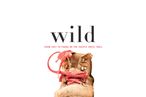
Nick Hornby Will Write the Screenplay for Wild


Back in March, Reese Witherspoon and her production company optioned Cheryl Strayed's memoir, Wild. Now Nick Hornby is onboard to write the screenplay, according to Deadline. In Wild, Strayed recounts her months-long solo hike along the Pacific Crest Trail, a trip she set out on in the wake of her mother's death, the end of her marriage, and a burgeoning heroin habit. (You might also know Strayed from her formerly anonymous, supremely moving advice column, Dear Sugar.) Hornby's not the obvious choice, but maybe all Wild needs to make the leap to the big screen is a little bit of punchy Britishness.

The Benefits of Poetry for Professionals


by John Coleman | Harvard Business review - November 27, 2012

This lyrically inclined insurance executive was far from alone in occupying the intersect of business and poetry. Dana Gioia, a poet, Stanford Business School grad, and former General Foods executive, notes that T.S. Eliot spent a decade at Lloyd's Bank of London; and many other poets including James Dickey, A.R. Ammons, and Edmund Clarence Stedman navigated stints in business.
I've written in the past about how business leaders should be readers, but even those of us prone to read avidly often restrict ourselves to contemporary nonfiction or novels. By doing so, we overlook a genre that could be valuable to our personal and professional development: poetry. Here's why we shouldn't.
For one, poetry teaches us to wrestle with and simplify complexity. Harman Industries founder Sidney Harman once told The New York Times, "I used to tell my senior staff to get me poets as managers. Poets are our original systems thinkers. They look at our most complex environments and they reduce the complexity to something they begin to understand." Emily Dickinson, for example, masterfully simplified complex topics with poems like "Because I could not stop for Death," and many poets are similarly adept. Business leaders live in multifaceted, dynamic environments. Their challenge is to take that chaos and make it meaningful and understandable. Reading and writing poetry can exercise that capacity, improving one's ability to better conceptualize the world and communicate it — through presentations or writing — to others.
Poetry can also help users develop a more acute sense of empathy. In the poem "Celestial Music," for example, Louise Glück explores her feelings on heaven and mortality by seeing the issue through the eyes of a friend, and many poets focus intensely on understanding the people around them. In January of 2006, the Poetry Foundation released a landmark study, "Poetry in America," outlining trends in reading poetry and characteristics of poetry readers. The number one thematic benefit poetry users cited was "understanding" — of the world, the self, and others. They were even found to be more sociable than their non-poetry-using counterparts. And bevies of new research show that reading fiction and poetry more broadly develops empathy. Raymond Mar, for example, has conducted studies showing fiction reading is essential to developing empathy in young children (PDF) and empathy and theory of mind in adults (PDF). The program in Medical Humanities & Arts (PDF) even included poetry in their curriculum as a way of enhancing empathy and compassion in doctors, and the intense empathy developed by so many poets is a skill essential to those who occupy executive suites and regularly need to understand the feelings and motivations of board members, colleagues, customers, suppliers, community members, and employees. 
Full article here.

The Case of the Missing O.E.D. Words


November 28, 2012 - The New Yorker - Posted by
OED-controversy-465.png
The very first part of what became the Oxford English Dictionary, published in 1884 and covering the range from A to Ant, did not include the word “African.” It did, however, include “American.” One might conclude from this evidence that the O.E.D., generally written by and for Victorian gentlemen, was biased against Africans.

But the real reason “African” was left out was rather different, and much less nefarious: James Murray, the dictionary’s first editor, made an early editorial decision that the O.E.D. would not include any proper nouns—this was regarded as the province of the encyclopedia, not the dictionary—and that words formed from proper nouns would likewise be excluded. This was a poor policy, which was quickly rescinded: “American” was duly entered when editorial work progressed deeper into the letter A, but by then it was too late to make changes in the “af-” section. It wasn’t until 1933, when Oxford University Press published “The Oxford English Dictionary: Being a Corrected Re-issue with an Introduction, Supplement, and Bibliography of a New English Dictionary on Historical Principles” (now referred to as the “1933 Supplement”), that this omission was rectified.

The linguist Sarah Ogilvie, a former director of the Australian National Dictionary Centre who herself worked as an editor for the O.E.D., has gained considerable attention for her new book, “Words of the World: The Global History of the Oxford English Dictionary.” An article about the book in the Guardian—excerpted on Gawker and many other places, and widely retweeted—highlighted the claim that Robert Burchfield, the editor of the four-volume “Supplement to the Oxford English Dictionary” published from 1972 to 1986, “covertly deleted thousands of words because of their foreign origins.”

This claim is completely bogus.

Read more: http://www.newyorker.com/online/blogs/culture/2012/11/the-case-of-the-missing-oed-words-solved.html#ixzz2Djs82sd3

Blogroll